
GeneralistAI — When Robots Start to Improvise — Welcome to boldstart
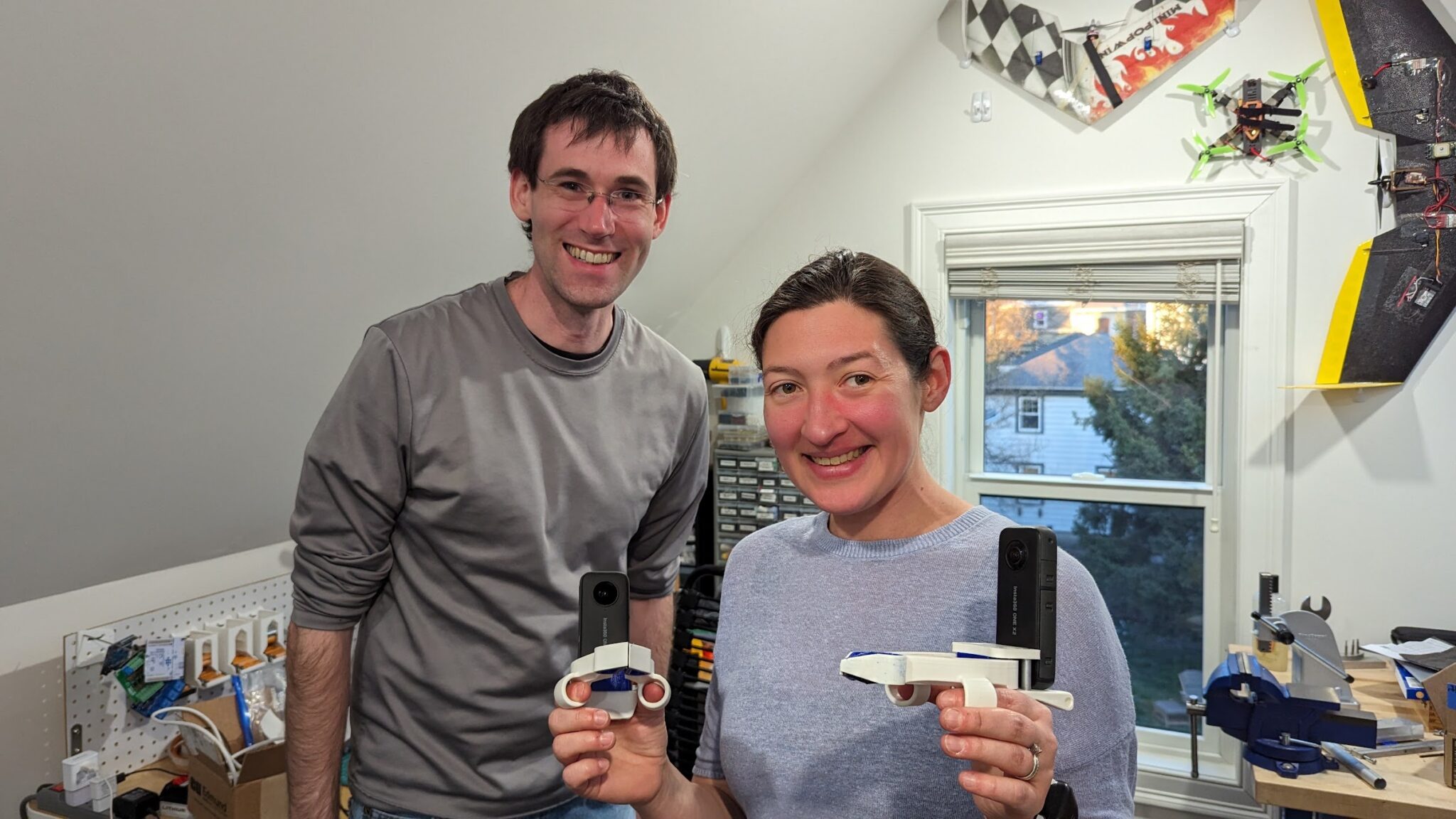
Andy Barry and Ellen Chisa with an early prototype of Generalist “data hands.”
Two years ago, before we even started to talk about the “autonomous enterprise,” we backed Pete Florence, Andy Zeng, and Andy Barry at inception. Our thesis has always been that the autonomous enterprise doesn’t stop at software – it extends into the physical world, where the real value of labor lives.
Pete and Andy Barry had been thinking about general-purpose robots since the early days of their PhDs at MIT. The vision was always there, but the technology wasn’t.
So they went and became some of the best roboticists in the world while they waited. Pete Florence led the research behind PaLM-E at Google DeepMind – his work has been cited over 19,000 times. Andy Zeng was right alongside him at DeepMind, co-authoring the foundational models that proved language and vision could drive physical intelligence. Andy Barry built Atlas, Spot, and Stretch at Boston Dynamics – the robots that made the world believe machines could actually move like humans.
I’d known Andy Barry for nearly two decades, so when he, Pete, and Andy Zeng came in saying “now is finally the time when we can build a general purpose robot” we knew we needed to work with them. Today, with the launch of GEN-1 we couldn’t be more confident that they were right.
Robots that move like humans, not look like humans.
Everyone likes to talk about robots that look like humans, but there’s something magic about what Generalist does instead. They take a robot that looks nothing like a person (just a standard industrial robot arm and a pincer gripper (“data hand”) – but when it moves, it feels like a human. It has the reflexes, dexterity, and intuition that people do.
That allows the robot to improvise, and do things unexpectedly. One of my favorite moments was watching a robot do the same task repeatedly with its right “hand.” Then, something in the setup changed and the next iteration it used its left – just like a person would. The robot figures out the right thing to do in the moment, and that’s why robotics is nearing a ChatGPT moment.
Solving the data problem.
Why was 2024 the time? The thing that convinced us at inception was that this team had a way to solve the data bottleneck: their “data hands.” Pete, Andy, and Andy had been thinking about them for years before starting the company.
Last summer when the GEN-0 model was released, the dataset was already the largest in the world. Today, it’s over a half million hours of data for training Generalist’s models. Data hands allow for the capture of micro-moments and human intuition to show up in the improvised robot behavior. The data set continues to grow every week.
Why it matters.
Large language models have already reached a point where they’re used daily for a wide variety of work tasks. Crafting a physical model to do the same will transform manufacturing, logistics, healthcare, and daily life – huge swaths of what we consider to be the autonomous enterprise.
Generalist is building exactly that with $140M of funding. Since we co-led the inception round with NVIDIA they’ve solved the data problem, made massive improvements to task reliability, speed, and improvisation in the GEN-1 model, and built out an incredible team with experience from Google DeepMind, Boston Dynamics, OpenAI, and welcomed incredible investors like Spark Capital, NFDG, and Bezos Expeditions.
Welcome to boldstart, Generalist!
Read more about the data approach in Forbes: Forbes: Generalist Is Betting Its Robot-Training Gloves Will Usher In Robotics’ ChatGPT
Read more about the GEN-1 model release from GeneralistAI.